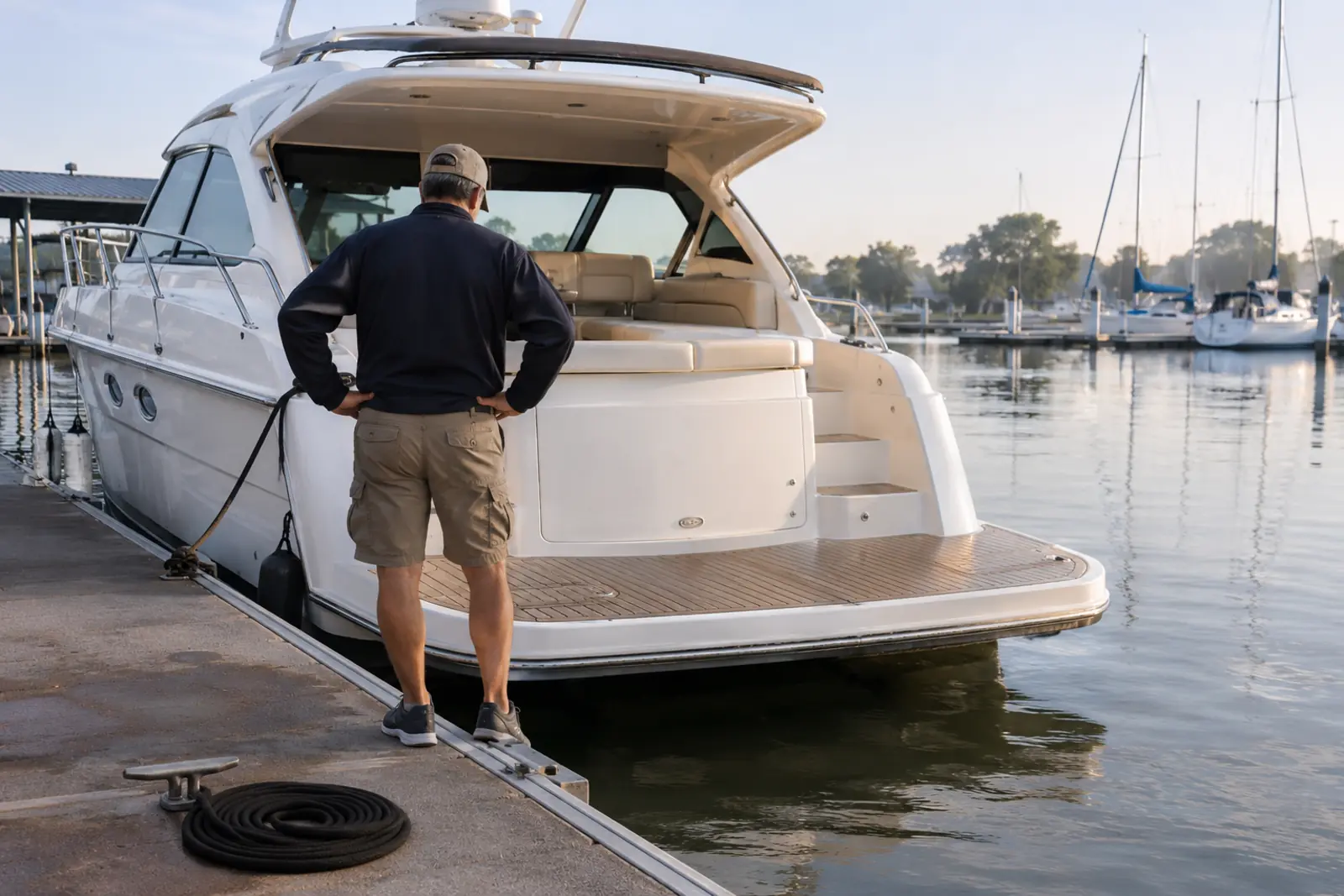
Houston surprises a lot of people when it comes to boating. The city sits less than fifty miles from the Gulf of Mexico, its southeastern edge dissolves into a tidal estuary that feeds Galveston Bay, and the Clear Lake area - home to more registered boat slips than almost anywhere else in the southern United States - is a fully operational maritime hub. All of which means that when you search for "yacht rental Houston," you are not chasing a fantasy. Real crewed charters, express cruisers, and luxury day boats operate out of here year-round. What you do have to understand is what the word "yacht" actually means in a Houston context, what waters are genuinely suited to that kind of experience, and whether a full charter is the right call for your group or whether a high-end pontoon gets you ninety percent of the experience at a fraction of the cost.
What "Yacht Rental" Actually Means in Houston
The word "yacht" does not carry a legal definition in US maritime law. In everyday marketing, Houston operators apply it to anything from a 26-foot express cruiser to a 60-foot motor yacht with a full crew - and sometimes to premium pontoons that bear no resemblance to a yacht at all. That ambiguity is not necessarily dishonest; it reflects how the term migrated from sailing culture into general recreational boating. It does mean, however, that you need to read listings carefully and ask direct questions before you assume what you are booking.
In practice, Houston "yacht rental" falls into three distinct structures:
- Crewed charter: You hire the boat and a licensed captain, and sometimes a full crew as well. You show up, enjoy the ride, and the operator handles everything from navigation to safety compliance. This is the most common structure for leisure yacht experiences in the Houston market.
- Bareboat charter: You take the helm yourself without a hired captain. Reputable bareboat operators require proof of boating competency - typically a recognized powerboat or sailing certification, or a demonstrated skills evaluation conducted before departure. True bareboat for vessels above 30 feet is relatively uncommon in Houston, partly because of insurance requirements and partly because Galveston Bay demands local knowledge.
- Day charter or sightseeing cruise: A hybrid model where you book a set experience - a sunset cruise, a Galveston Bay tour, a private dinner on the water - on a vessel that may carry your group exclusively or alongside others on a shared departure. Premium versions of this format legitimately feel like a yacht outing without the full charter overhead.
When a Houston listing says "rent a yacht," it almost always means a crewed day charter. The captain is included, the route is flexible within reason, and the experience is comparable to what you would get chartering a boat in a recognized coastal market. What it typically is not, unless specifically marketed that way, is a bareboat arrangement that lets you captain the vessel independently.
Boat Types Marketed as Yachts in the Houston Area
Once you understand the booking structure, the next question is the actual vessel. The Houston charter market offers several categories of boat that show up in "yacht" searches, each delivering a different experience.
Express Cruisers (28 to 45 Feet)
These are the most common "yacht rental" vessels operating out of Clear Lake and Galveston Bay. An express cruiser is a motorboat with a fully enclosed cabin, overnight berths, a marine head, and often a small galley. At 32 to 40 feet they handle open bay conditions well and can accommodate eight to twelve passengers comfortably for a day trip. Many are powered by twin inboard engines and cruise efficiently at 20 to 25 knots. If a Houston listing shows a sleek white motorboat with a low, sporty profile and a cabin below, this is probably what it is. Supply is solid in the Clear Lake and Seabrook marina cluster.
Flybridge Cruisers (38 to 60 Feet)
A step up in both size and amenity level. The defining feature is an upper helm station - the flybridge - that offers 360-degree visibility and open-air seating on top of the main cabin. These vessels are what most people picture when they say yacht: two levels, serious onboard space, and the ability to handle longer passages across Galveston Bay toward the Gulf. They are more expensive to charter and less common in Houston than express cruisers, but they exist, primarily operating out of the larger marinas around Clear Lake and Nassau Bay.
Sport Yachts and Luxury Cruisers
The upper tier of the Houston charter market includes European-style sport yachts - sleek, low-profile vessels with unusual attention to interior finish and performance. A handful of operators in the Clear Lake area keep 40-to-55-foot vessels in this category for private charter. The experience genuinely matches what you would find in a Florida charter market, at Texas prices. Supply is limited and these vessels book out quickly in peak summer. If this is what you are after, start your search well before the season.
Catamarans
Sailing and power catamarans occasionally appear in Houston charter listings. They are most practical on Galveston Bay, where there is enough open water and consistent wind for meaningful sailing. A catamaran offers exceptional deck space and stability relative to its length - an advantage for large groups who want to socialize rather than focus on sailing technique. For groups of ten or more, a catamaran charter is worth looking at specifically.
Luxury Pontoons Marketed as "Yachts"
Some operators stretch the word "yacht" to cover premium pontoon boats with high-end upholstery, elevated sound systems, and swim platforms. These are not yachts in any traditional sense, but they can deliver a genuinely luxurious day on the water - especially on Lake Conroe where open-bay conditions are not a factor. The price-to-experience ratio is often the best available in the Houston market. More on this in the final section.
The Best Waters for a Houston Yacht Experience
Houston's waterway geography is what makes this charter market viable in the first place. Three bodies of water are directly relevant to a yacht or charter outing in this region, each with a different character.
Clear Lake
Clear Lake is a natural tidal lake connected to Galveston Bay through Clear Creek and the Clear Creek Channel. It sits in the League City, Nassau Bay, and Seabrook area - roughly thirty miles southeast of downtown Houston, near the Johnson Space Center. The lake itself is relatively shallow and narrow for a large yacht, but the channel access to the bay is well-marked and the marina density around Clear Lake is extraordinary. South Shore Harbour, Watergate Yachting Center, Nassau Bay Marina, and a dozen other facilities cluster around this single body of water. Most Houston crewed charters stage out of Clear Lake precisely because of this infrastructure concentration and the ease of boarding in sheltered conditions.
The marina area provides calm departure and return regardless of conditions further out in the bay. Once you clear the channel, the water opens up dramatically into Galveston Bay. For a half-day or full-day charter that combines marina scenery with real open-water running, Clear Lake is the logical home base. The Kemah Boardwalk is visible from the water near the Clear Creek outlet and makes for a recognizable landmark on a first bay trip.
Galveston Bay
Galveston Bay is a large, shallow estuary - roughly 30 miles long and up to 12 miles wide at its broadest point - that connects the Clear Lake area and the Houston Ship Channel to the Gulf of Mexico. It is the main arena for any serious Houston yacht outing. Wind and chop can build quickly across its exposed expanses, so a charter captain will monitor forecasts carefully and may adjust routing depending on conditions. The bay's southern limit is Galveston Island, where the historic Strand district and the Seawall make for a compelling destination on a longer charter.
Shipping traffic on the bay is real and must be respected. The Houston Ship Channel - the busiest petrochemical shipping corridor in the United States - runs across the northern bay. Charter captains stay clear of the deep-draft vessel lanes, and the channel itself holds no appeal as a recreational destination. The broader bay, however, offers ample open water for a full yacht experience, and the Bolivar Roads passage near Galveston provides dramatic views of oceangoing vessels transiting to and from the Gulf.
Lake Conroe
Lake Conroe is a 21,000-acre freshwater reservoir in Montgomery County, about forty miles north of Houston. It does not offer deep-water or coastal scenery, but it is calmer, more predictable, and more forgiving for groups who want to swim, fish, or cruise without Galveston Bay's wind exposure. Luxury pontoon rentals and smaller express cruisers work well here. The shoreline is largely developed with residential marinas and several public launch facilities. For families or groups primarily focused on on-water socializing rather than a full nautical experience, Lake Conroe is a natural fit and often more practical than making the drive southeast to Clear Lake.
Crewed Charters vs. Self-Drive: What Local Operators Actually Offer
The majority of Houston yacht rental listings, when you read them carefully, include a captain as part of the base price. This is the crewed charter model, and it is both more practical and more common than bareboat for first-time renters on these waters.
A crewed charter captain in Texas who carries passengers for hire is required to hold a valid US Coast Guard Merchant Mariner Credential with an appropriate vessel tonnage endorsement. What is known informally as the "six-pack" license - officially, an Operator of Uninspected Passenger Vessel credential, or OUPV - permits carrying up to six paying passengers. Larger charter operations use captains with higher tonnage ratings that allow more passengers under a Coast Guard-inspected vessel certificate. When you book a crewed charter, you are entitled to ask about the captain's credentials - and any reputable operator will provide them without hesitation.
Crewed charters typically operate on a half-day (3 to 4 hours), full-day (6 to 8 hours), or sunset (2 to 3 hours) basis. Some operators offer overnight passages to Galveston or along the Intracoastal Waterway for groups seeking a more extended experience. The captain handles all navigation, anchoring, and safety decisions - including the right to return to port early if conditions deteriorate. That last point matters on Galveston Bay, where afternoon thunderstorms in summer can build quickly.
Self-drive options in the Houston "yacht" category are limited above 30 feet. For a true bareboat in that size range, most operators require demonstrated competency - either a recognized credential from organizations like the American Sailing Association or US Power Squadrons, or an on-water skills evaluation before the keys change hands. If you want to self-drive something marketed as a yacht in Houston, your most realistic path is a premium pontoon rental, which carries different requirements and is widely available without a captain at a substantially lower price point.
What to Expect to Pay
Houston charter pricing spans a wide range depending on vessel size, operator, season, and what the base rate actually includes. Specific figures change over time, so treat the ranges below as orientation rather than quotes and verify current pricing directly with each charter company.
Crewed Express Cruiser (28 to 40 Feet)
A half-day crewed charter on a mid-size express cruiser typically falls somewhere between a few hundred and roughly a thousand dollars, depending on the vessel's age, fit-out level, and whether fuel is included in the base rate. Full-day rates roughly double the half-day figure. Fuel surcharges are common on twin-engine inboard boats and can add meaningfully to the final bill - worth asking about explicitly when you request a quote.
Flybridge or Sport Yacht (40 to 60 Feet)
These command a substantial premium. Half-day rates for a well-equipped 45-to-55-foot cruiser can reach several thousand dollars in peak season, and the most desirable vessels on summer weekends carry pricing that approaches Florida or Southern California charter market levels. The experience is comparably premium. Gratuity for the captain and crew - typically 15 to 20 percent of the charter fee - is customary and is not always included in quoted rates, so ask about it directly.
Day Charter and Sunset Cruise Format
Some Houston operators sell individual tickets or private buyouts of sunset and sightseeing cruises on larger vessels. Per-person pricing on a shared departure is the most affordable way to experience a boat in this category. Private buyouts - where your group takes the entire vessel - are common for special events and priced accordingly, usually at a flat rate that varies with vessel size and duration.
Luxury Pontoon
Premium pontoon rentals in the Houston and Lake Conroe area typically run in the range of several hundred dollars for a half-day self-drive, with captain add-on options available from some operators. This is frequently the strongest value proposition for a group that wants a comfortable, social water day without full charter overhead. The boat rental cost guide for Houston and Austin covers the full pricing landscape across both markets in more detail.
What Drives the Price Higher
Several variables reliably push charter costs up. Vessel size is the single biggest factor. Time of year matters significantly - summer weekends and holiday weekends (Memorial Day, July Fourth, Labor Day) carry peak pricing and book out earliest. Adding catering, event coordination, or additional crew costs extra. Overnight or multi-day passages are priced differently from same-day charters. And any charter that ventures beyond the inland bay toward Gulf waters - which requires both a differently equipped vessel and a more experienced captain - commands a meaningful premium over sheltered-water day trips.
How to Book: Lead Time, Group Limits, and Questions to Ask
Houston's summer charter market moves quickly. For peak-season dates - July Fourth weekend in particular, but also Memorial Day and Labor Day - serious operators book their best vessels four to eight weeks in advance. Mid-week summer charters and fall-through-winter dates have considerably more availability. As a general rule, start the booking process at least three to four weeks before your desired date. For a holiday weekend, eight weeks is not excessive.
Group Size and Vessel Capacity
The number of passengers a charter vessel can legally carry is dictated by US Coast Guard regulations and the vessel's specific certification - not simply available deck space. For a crewed charter with a captain holding an OUPV license, the legal passenger maximum is six paying guests. Larger vessels operating under a Coast Guard-inspected certificate of inspection can carry more. If your group exceeds twelve to fourteen people, ask explicitly about passenger capacity documentation before you assume a vessel is legal for your headcount. Operators who cannot produce clear answers on this question are worth walking away from.
Questions Worth Asking Every Operator
- Is the captain's USCG license current, and what is the tonnage or passenger endorsement?
- Is fuel included in the quoted rate, or is it billed as a surcharge after the trip?
- What is the cancellation and rescheduling policy, and is there a weather clause for unsafe conditions?
- Can the route be customized - for example, transiting to Galveston Island or anchoring at a specific bay location?
- Is alcohol permitted, and are there any restrictions on what guests can bring aboard?
- What safety equipment is onboard, and is there a safety orientation before departure?
- Is gratuity included in the quoted rate, or is it expected separately?
Reputable operators will answer all of these questions without hesitation. Evasiveness on licensing, documented passenger capacity, or cancellation terms is a warning sign worth taking seriously. The Houston boat rental guide covers additional guidance on evaluating local operators and what to watch for in Texas boat rental agreements.
When a Luxury Pontoon or Deck Boat Is the Smarter Call
Not every group that searches "yacht rental Houston" actually needs a yacht. A significant share are looking for the experience that word implies - open water, comfortable seating, a good sound system, sun and maybe a swim stop - without necessarily caring whether the hull is fiberglass or aluminum, or whether there is a stateroom below.
For those groups, a premium or executive-tier pontoon rental often delivers ninety percent of the experience at a fraction of the price. Modern luxury pontoons are not the utilitarian fishing platforms of a decade ago. The high-end tier features deep-cushion lounging furniture, Bluetooth sound systems, swim platforms, Bimini tops, and built-in coolers. On Lake Conroe or Clear Lake on a calm weekend morning, one of these boats is a genuinely pleasant way to spend a half-day on the water.
A luxury pontoon also gives your group something a crewed charter typically does not: direct control. You drive it yourself, you set the pace, and you are not dependent on a captain's preferred route or timing. For families with children, that flexibility matters considerably. The guide to Houston boating spots covers the specific locations where a self-drive pontoon or deck boat makes the most practical sense within the Houston market.
The honest calculus is this: if your group genuinely wants the experience of a larger, faster, deeper-water vessel with a professional captain who knows Galveston Bay - book a crewed charter. If you want maximum on-water social time, flexibility, and value, a premium pontoon rental is probably the better fit. The two products serve different needs, and understanding which you actually want before you start pricing saves a lot of time and back-and-forth.
Frequently Asked Questions
Do you need a boating license to rent a yacht in Houston?
For a crewed charter - which is the standard model for most Houston yacht rental listings - no license or certification is required. The captain handles all navigation. If you want to self-drive, Texas requires a boater education certificate for operators who meet specific age criteria established by Texas Parks and Wildlife, and those requirements have been expanding over recent years. Check the current rules at the official TPWD website before assuming you qualify to operate any vessel independently - the rules change, and the site is the authoritative source.
What is the best water to charter a yacht in Houston?
Most crewed charters stage out of the Clear Lake area in League City and Seabrook, using Galveston Bay as the primary open-water destination. Clear Lake provides sheltered marina access and calm boarding conditions, while Galveston Bay delivers the open-water experience that justifies chartering a larger vessel. Lake Conroe is a solid option for a freshwater day on a smaller luxury boat or premium pontoon, but it does not connect to the bay or Gulf and is a different kind of outing.
How far in advance should I book a yacht charter in Houston?
For peak summer weekends and holiday dates - especially July Fourth and Labor Day - book four to eight weeks ahead for the best vessel selection. Mid-week and off-season dates are more flexible. The window tightens fast once June arrives and demand peaks, so if you have a specific summer Saturday or holiday date in mind, start the process earlier than you think necessary.
How many people can a chartered yacht hold in Houston?
Passenger capacity is determined by the vessel's US Coast Guard certification and the captain's license endorsement - not simply the size of the deck. Captains holding an Operator of Uninspected Passenger Vessel (OUPV) license can carry a maximum of six paying passengers. Larger commercially certified vessels can carry more under a formal certificate of inspection. Always confirm the documented passenger maximum with the operator before booking, especially for groups over ten people.
What is the difference between a crewed charter and a bareboat charter in Houston?
A crewed charter includes a licensed captain who handles all navigation, safety decisions, and vessel operation - you bring your group and enjoy the experience. A bareboat charter means you take the helm yourself without hired crew. Bareboat for larger or more capable vessels is uncommon in Houston because operators require demonstrated boating competency and insurance requirements are considerably more complex. The vast majority of "yacht rental" listings in the Houston market are crewed charters, not bareboat arrangements.
Is a full yacht charter worth it compared to a luxury pontoon rental in Houston?
It depends on what your group values most. A crewed yacht charter delivers a larger, faster, more capable vessel with a professional captain and genuine open-water access to Galveston Bay. A luxury pontoon rental is self-driven, more flexible on timing, easier to book, and significantly less expensive. For groups focused on socializing, swimming, and casual cruising - especially on Lake Conroe or Clear Lake - a premium pontoon often delivers better value. Groups who want the genuine open-bay yacht experience, or who are marking a milestone that calls for a captain-and-crew setup, will find a crewed charter worth the premium.