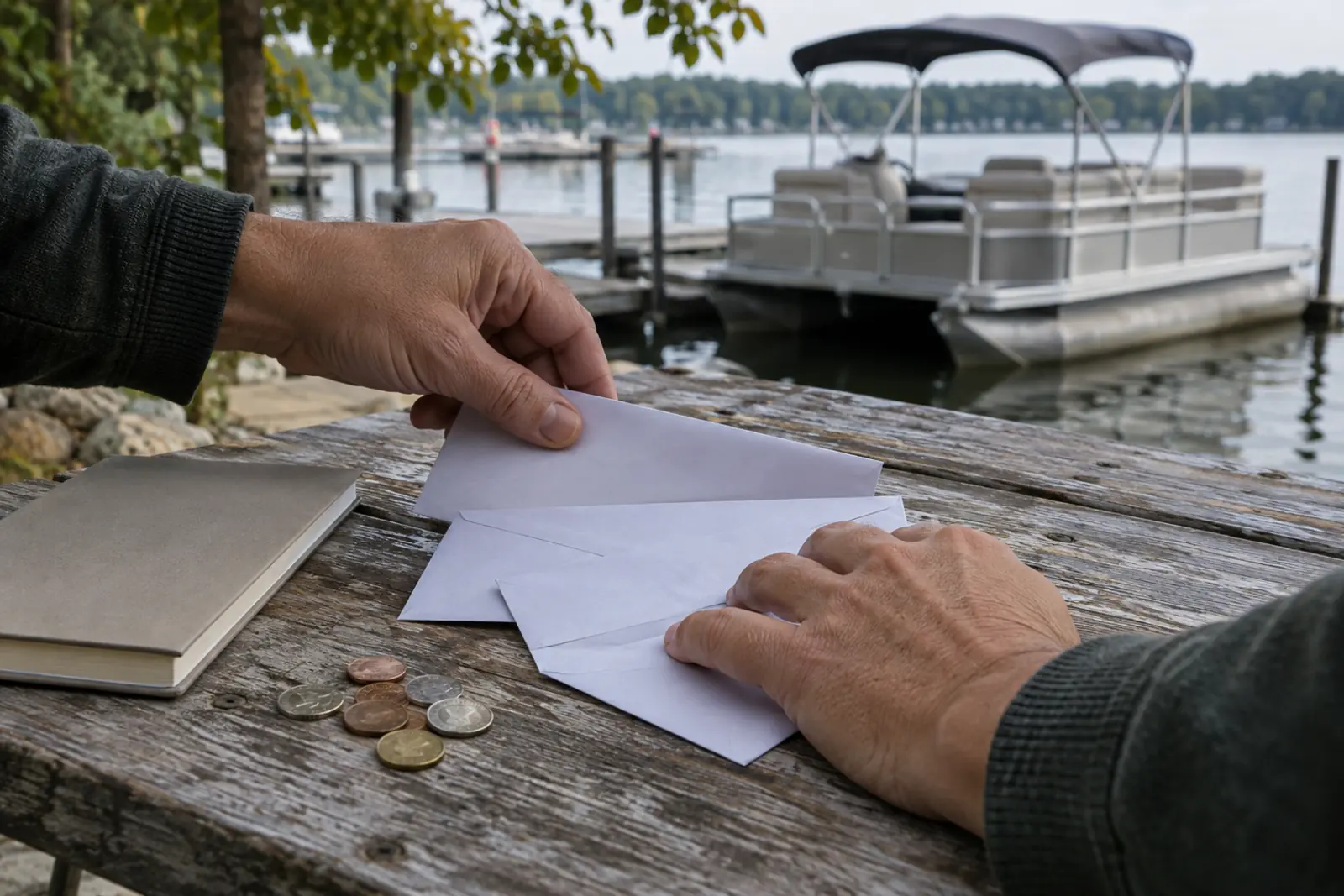
The first question almost everyone asks before booking a boat rental in Houston or Austin is a simple one: how much is this going to cost? The honest answer is that boat rental pricing in Texas involves more moving parts than most people expect. The advertised rate on a marina website is rarely the final number on your receipt. Fuel, security deposits, damage waivers, water toy fees, and weekend premiums can all add meaningfully to what you pay.
This guide breaks down the real cost of renting a boat on the most popular Texas lakes - Lake Conroe, Clear Lake, Galveston Bay, Lake Travis, and Lake Austin - with typical price ranges for every common boat type and a clear explanation of what shows up as an extra charge. Numbers here reflect typical market rates as of 2025. Because marina pricing shifts seasonally and operators update their menus frequently, always confirm the current rate directly with the company before you book.
The Two Big Cost Variables: Boat Size and When You Go
Before diving into specific numbers, understand the two factors that move the price needle most dramatically. First is boat size, which is tightly tied to passenger capacity. A pontoon that legally holds 10 people costs noticeably more than one that holds 8, and a large tritoon rated for 15 or 16 passengers costs more still. Texas rental companies size their boats to group needs, so the more people in your party, the larger - and more expensive - the boat you will need.
Second is timing. The gap between a Thursday in October and a Saturday in July can be 30 to 50 percent on the same boat at the same marina. Texas lakes run on a clear demand calendar: summer weekends and holiday weekends command the highest prices and the tightest availability, while weekdays in the cooler months are often half the price with open slots on short notice. If your schedule has any flexibility at all, moving your trip from Saturday to Tuesday can save you several hundred dollars.
Pontoon Boat Rental Prices in Houston
Pontoon boats are the most commonly rented vessel in the Houston area, available on Lake Conroe, Clear Lake, Lake Houston, and from several operators with access to Galveston Bay. Here are the realistic price ranges you will encounter, broken into the three typical size tiers.
Small Pontoons - 20 to 22 Feet, Up to 10 Passengers
These entry-level boats work well for families with children, couples, and groups of six to eight who want a little breathing room. In the Houston market, expect to pay roughly $350 to $550 for a half-day rental (usually four hours) and $550 to $850 for a full day of eight hours. Weekday rates sit at the lower end of those ranges; Saturday and Sunday rates push toward the top. These boats are plentiful on Lake Conroe and represent the best value option when your group does not need a lot of deck space.
Standard Pontoons - 22 to 24 Feet, 10 to 12 Passengers
This is the most popular size category in Houston and the one most rental companies feature prominently in their listings. A standard pontoon in this range typically runs $450 to $700 for a half-day and $700 to $1,100 for a full day during regular weekends in peak season. Midweek rates in spring or fall can drop to $400 to $600 for a full day. If you are planning a birthday party, bachelorette, or family outing for 10 to 12 people, budget from this range as your baseline before adding extras.
Large Tritoons and Party Pontoons - 24 to 27 Feet, 14 to 16 Passengers
Upgraded tritoon-style boats with triple tubes, more horsepower, and elevated lounging areas are increasingly available on Lake Conroe and at some Clear Lake marinas. These boats cost more and they deliver more - better stability, faster plane, more shade options, and room for a genuinely large group without feeling packed. Expect $600 to $900 for a half-day and $900 to $1,400 for a full day, with premium holiday weekend rates occasionally higher than that. For corporate outings or large birthday groups that want to stay on one boat rather than splitting across two, the upgrade often pays for itself in simplicity.
Pontoon Boat Rental Prices in Austin
Lake Travis is Austin's primary boating destination and home to the largest concentration of boat rental operators in the region. Lake Austin, the smaller and calmer river-like lake closer to the city, has a handful of operators as well. Lady Bird Lake is restricted to non-motorized watercraft, so power boat rentals concentrate on the two lakes upstream.
Lake Travis Pontoon Pricing
Lake Travis has some of the most competitive rental pricing in Texas during the spring shoulder season, but weekend summer rates can be steep. A standard 22 to 24 foot pontoon for 10 to 12 passengers will typically run $500 to $750 for a half-day and $750 to $1,200 for a full day on a summer weekend. The lake's size and scenic cliff scenery mean operators can charge at the higher end of the Texas market during July and August. Midweek rates in May, September, or October often fall in the $500 to $800 range for a full day - genuinely good value on one of the most beautiful lakes in the state.
One Lake Travis-specific cost factor worth knowing: some marinas charge a launch or access fee on top of the rental rate, particularly during peak weekends when parking and launch facilities are congested. This is not universal, but it is worth asking about when you call to book.
Lake Austin Pontoon Pricing
Lake Austin rentals are generally priced similarly to Lake Travis but with fewer operators, which means less price competition. The lake is narrower and calmer - better for a relaxed float than a full-day adventure - and most rentals here skew toward half-day or shorter reservations. Expect $400 to $650 for a four-hour rental on a standard pontoon. Because the lake is sheltered from wind and has no open-water exposure, it is a popular choice for first-timers and families with young children despite being slightly pricier per hour than Lake Travis options.
Deck Boat and Ski Boat Rental Prices
Deck boats and ski-style boats are designed for activities like wakeboarding, waterskiing, and high-speed tubing. They carry fewer passengers than a pontoon - typically six to eight people - and they cost more per hour because of their higher horsepower engines and the specialized equipment they are built to tow.
In both the Houston and Austin markets, a 20 to 23 foot deck or ski boat typically rents for $500 to $800 for a half-day and $800 to $1,300 for a full day. Lake Travis is especially popular for this type of rental because its clear deep water and minimal vegetation make it ideal for pulling wakeboarders. If watersports are the point of your trip rather than a secondary activity, this boat type justifies its higher price. For a group of four to six who want to rotate through wakeboarding or skiing, the additional cost per person is often comparable to what you would pay at a commercial wake park.
Tri-toon pontoons with upgraded horsepower - sometimes called "sport tritoons" - split the difference. They carry 12 to 14 passengers like a standard pontoon but have enough engine power to tow tubes and do light wakeboarding. Expect to pay $650 to $1,000 for a half-day on these boats.
Fishing Boat Rental Prices
Anglers who want to cover water efficiently rather than carry a large group have more affordable options available. Small aluminum jon boats and basic flat-bottom fishing vessels are available at some Lake Conroe marinas and on Lake Livingston east of Houston. These boats typically rent for $100 to $200 for a half-day, making them the most budget-friendly motorized rental category. They hold two to four people, have minimal amenities, and are purely functional.
Dedicated bass boats and fishing-focused vessels with trolling motors and livewells are less commonly rented because the liability exposure is higher, but some charter-style operators on Lake Conroe and Lake Travis offer guided fishing packages that include the captain, boat, tackle, and bait. These guided trips are priced differently from standard bareboat rentals - expect $400 to $700 for a four-hour guided session for two people. That price includes the captain's time and expertise, which changes the math compared to renting a boat and figuring out the lake yourself.
What Is Included in the Base Rental Price
Understanding what a rental company includes in its advertised rate - and what it charges separately - is where many first-time renters get surprised. Here is what is typically covered without an upcharge at most Texas boat rental operations.
- Life jackets: Federal law requires a Coast Guard-approved personal flotation device for every person on board, and all rental companies provide them. Adult life jackets are almost always included; some charge a small fee for child-sized PFDs, so ask if you have young children.
- Basic safety equipment: Fire extinguisher, throwable flotation device, visual distress signals, and a sound-producing device (horn or whistle) are standard on every legal rental boat.
- Brief orientation or boat walkthrough: Most marinas include a 10 to 20 minute rundown of the boat's controls, navigation rules for that specific lake, and no-wake zones. This is worth your full attention even if you have driven a pontoon before - every lake has its own quirks.
- Mooring assistance: Dock staff typically help you load, cast off, and tie back up on return at no extra charge.
What Costs Extra: The Fees That Catch People Off Guard
This section is worth reading carefully before you finalize a booking, because the gap between the listed rate and what you actually pay can be $100 to $300 or more once these line items are added.
Fuel
Fuel is the single most common unexpected expense for first-time renters. Most Texas rental companies do not include fuel in the base rate. Instead, they either charge your card for the actual fuel used at the end of the trip or require you to return the boat with the same fuel level it had at departure - often full. On a standard pontoon, an active day on the water covering 20 to 30 miles can burn $40 to $80 in gas. A larger boat with a 150-horsepower engine burning fuel at speed for a full day can cost $100 or more in fuel alone. Ask the company specifically how fuel is handled and factor it into your budget.
Damage Waiver or Insurance Fee
Many operators offer - or require - a damage waiver that limits your financial liability for accidental damage to the boat. This is not full insurance; it typically covers accidental scrapes and minor collisions up to a stated limit while you are still responsible for gross negligence or deliberate damage. These waivers usually cost $25 to $75 and are worth having. Some companies build them into the rate automatically; others present them as optional add-ons. Understand what you are signing before you initial the rental agreement.
Security Deposit
Expect a security deposit of $200 to $500 placed as a hold on your credit card at the time of rental. This is returned after the boat is inspected on return, usually within one to three business days. Use your credit card rather than a debit card for this charge so the hold does not tie up cash in your checking account for days after the trip.
Water Toys and Equipment
Inflatable tubes, wakeboards, water skis, and towropes are almost never included in a standard pontoon rental. These are rented separately, usually at $25 to $75 per item per day. If your group wants to tube for four hours, budget an extra $50 to $80 on top of the boat rental. Coolers, Bluetooth speakers, and shade canopies are sometimes available as rentals too. Bring your own if the company allows it, which most do, and you will keep those costs down.
Cleaning Fee
Return the boat in genuinely poor condition - sunscreen ground into the upholstery, food waste left in the cooler, stains on the carpet - and expect a cleaning fee of $50 to $150 deducted from your deposit. Pack a small trash bag, rinse off any sunscreen that pooled on the seat cushions, and do a quick pass before you dock. It takes five minutes and can save you a meaningful charge.
Late Return Fee
Marinas run tight schedules, especially on summer weekends when every boat needs to be cleaned, refueled, and turned around for the next group. Returning even 30 minutes late can result in fees of $50 to $150 per hour. Build a buffer into your departure timeline - plan to arrive back at the dock at least 30 minutes before your reservation officially ends.
Weekend and Holiday Price Premiums
Texas boat rental operators apply clear pricing tiers based on demand. The difference between a weekday rate and a peak holiday weekend rate on the same boat can exceed 40 percent at some Lake Travis and Lake Conroe marinas. Here is a general breakdown of how timing affects price.
Weekday Rates (Monday through Thursday)
These represent the best value in every season. Even during July, a Tuesday rental typically runs 20 to 30 percent less than the same boat on Saturday. Availability is also far better on weekdays. If you have a flexible work schedule or are planning a corporate outing that does not need to fall on a weekend, booking Tuesday through Thursday is the most reliable way to save money and get your preferred time slot.
Standard Weekend Rates (Friday through Sunday, Non-Holiday)
This is the baseline "normal season" weekend rate that most pricing pages advertise. Friday afternoons are sometimes priced identically to Saturday mornings. Weekend pricing reflects steady demand but not the extreme premium that holidays carry.
Holiday Weekend Surcharges
Memorial Day, July 4th, and Labor Day are the three peak weekends on Texas lakes. Some operators charge 25 to 50 percent above their standard weekend rate for these dates. These weekends also carry booking lead times of two to four months at popular Lake Travis and Lake Conroe marinas. If you plan to rent a boat on one of these holidays, book early and expect the top of every price range. For more detail on navigating holiday bookings, the holiday boat rental guide on this site covers those three weekends in depth.
How Group Size Affects Your Per-Person Cost
Looking at the total rental price in isolation can make boat rental seem expensive. The math looks very different when you divide by the number of people on board.
A 22-foot pontoon renting for $900 for a full day sounds like a lot. Split that among 10 people and each person pays $90 for eight hours on the water - less than a movie and dinner, far less than a day at an amusement park. The economics of boat rental generally improve as the group gets larger, up to the capacity limit of the boat. The sweet spot in terms of cost-per-person is usually a full or nearly full boat on a weekday during shoulder season.
When groups grow beyond the capacity of a single standard pontoon - typically beyond 12 or 14 people - the choices are either to upgrade to a large tritoon, rent multiple boats (which requires at least two licensed or certified drivers), or book a guided party boat charter that provides the captain and handles logistics. For very large groups, the charter option is often the most cost-effective and least stressful choice even though the total price is higher.
Tips for Getting the Best Price on a Texas Boat Rental
A few practical moves can meaningfully reduce what you pay without compromising the quality of your day.
- Book the earliest departure time available. Morning slots - departures before 10 a.m. - sometimes carry a slight discount at marinas trying to maximize boat utilization across the day. You also get the lake before it gets crowded.
- Ask about midweek package rates. Some Lake Conroe and Lake Travis operators offer discounted packages specifically for Tuesday through Thursday bookings, particularly in spring and fall. These are not always advertised prominently but are often available if you ask directly.
- Avoid adding toys you will not actually use. It is easy to add a tube, a wakeboard, and a kneeboard when booking because they all sound fun. Be realistic about how many activities your group will actually cycle through in a half-day. Renting gear you use once and forget about is wasted money.
- Compare the full cost, not the headline rate. When comparing two companies, ask both for the total all-in price including fuel estimate, waiver, and any mandatory fees. The company with the lower headline rate sometimes has a higher total once fees are factored in.
- Book at least two to three weeks out for summer weekends. Last-minute summer weekend availability is thin and what remains is often priced at the top of the market. Advance booking secures both your preferred time slot and the standard rate rather than a last-minute premium.
What You Should Budget for a Full Day on the Water
To make planning easier, here is a realistic all-in budget range for the most common Houston and Austin boat rental scenarios, covering the base rental plus fuel, a damage waiver, and one or two rented water toys. These figures assume a summer weekend booking; weekday or shoulder-season trips will be meaningfully lower.
- Small group, 6-8 people, standard pontoon, half-day: $600 to $900 all-in
- Medium group, 10-12 people, standard pontoon, full day: $900 to $1,400 all-in
- Large group, 14-16 people, tritoon, full day: $1,200 to $1,800 all-in
- Action sports focus, 4-6 people, ski/deck boat, half-day: $700 to $1,100 all-in
- Guided fishing trip, 2 people, 4 hours with captain: $450 to $750 all-in
Divide any of those numbers by the people in your group and boat rental becomes one of the more cost-effective ways to spend a full day in Texas. Compared to tickets, food, and parking at a theme park for the same group, a lake day on a boat often wins on both price and experience.
Frequently Asked Questions
How much does it cost to rent a pontoon boat in Houston for a day?
A standard 22-24 foot pontoon for 10-12 people typically runs $700 to $1,100 for a full 8-hour day on Lake Conroe or Clear Lake. Larger tritoon-style boats for 14-16 passengers can reach $1,400 or more. Prices rise significantly on weekends and holidays. Always confirm current rates directly with the rental company.
Is it cheaper to rent a boat in Austin or Houston?
Rates are broadly similar between the two cities, though Lake Travis operators sometimes charge a slight premium during peak summer weekends because demand on that lake is especially high. Houston area lakes like Lake Conroe tend to offer a wider range of rental companies, which creates more price competition. Neither city is dramatically cheaper - the biggest driver of cost is timing, not location.
What is NOT included in a typical Texas boat rental price?
Fuel is the biggest extra cost - most Texas rental companies charge separately for gas, either billing your card after the trip or requiring you to return with a full tank. Other common add-ons include a damage waiver or insurance fee ($25-75), a captain if you want one, water toys like tubes or wakeboards, and a cleaning fee if the boat comes back dirty. Confirm the full cost breakdown before you book.
How much does it cost to hire a boat captain in Houston or Austin?
Adding a licensed captain to your rental typically costs an extra $150 to $300 for a half-day trip and $250 to $500 for a full day. Some companies bundle captain fees into specialty packages like sunset cruises or fishing charters. If you are a first-time boater or want to focus entirely on your group rather than navigating, a captain is worth the extra spend.
When is the cheapest time to rent a boat in Houston or Austin?
Weekdays from September through early May offer the lowest rates and best availability. Avoid Memorial Day weekend, July 4th, and Labor Day weekend if budget is a priority - those dates carry the steepest premiums and book out months in advance. Early morning slots sometimes come at a slight discount compared to peak midday departure times.
Do I need to tip the boat captain or rental staff?
Tipping is not required but is genuinely appreciated. For a captain who runs a smooth trip, 15 to 20 percent of the rental cost is a reasonable guide. For dock staff who help you load gear, rig the tubes, and handle mooring, $20 to $40 is a thoughtful gesture. Bring cash - tips rarely flow cleanly through credit card systems at marina docks.
Ready to get specific numbers for your trip dates and group size? The contact page connects you with the team at Luxe Boat Rental Guide, who can help you identify the right boat type, understand total costs for your specific scenario, and find reputable operators on the lake you have in mind.